Dr Lydia MedlandIAA Bristol Model Placement Award has been awarded funding to undertake a co-produced impact project: ‘A People-focused Approach to Food System Policy and Practice with the Soil Association’.
This impact project responds to multiple crises for the UK food system; climate change, increasing input costs, and worker and skills shortages are all underlined by very tight margins for food growers and producers. This project takes the horticultural sector as a starting point. As public and private health campaigns often remind consumers: we need our ‘5 a day’ of fruit and vegetables to prevent life-long health conditions. Edible horticulture, the sector that grows this nutritious food, requires more people than any other type of farming.
Fruit and vegetables are increasingly sourced from overseas. Yet, food security is also of public concern. Importing food from lower-income countries can displace social and environmental impacts elsewhere, leaving them out of sight and unresolved. Policy and public consensus hold that a horticultural sector should remain viable in the UK and a transition should be made towards nature-friendly farming practices that deal with issues arising in situ (See: Feeding Britain, Lang, 2020 on these debates). Agroecology, organic agriculture and nature-friendly farming are practices that seek to reduce detrimental impacts. The Soil Association is a leader in promoting these practices.
This project takes a novel approach through a collaboration that re-imagines how individuals who grow food are discussed and supported in policy and practice. Prompted by Medland’s research findings, we will re-consider who works to produce fruit and vegetables in England* and how ways in which they are labelled aid or undermine them. Furthermore, we will explore how under-valued groups could be further supported to ensure both their well-being and the longevity of the edible horticulture sector, something crucial for food security.
The pen asks: ‘Need seasonal workers?’ It’s a freebie from a horticultural event aimed at fruit growers. The expected answer is, ‘yes’. On the other side of the pen is the name of an agency that sponsors workers to come to the UK. Where will the workers come from? Neither agent nor grower is expected to care. How will they be recruited? The agency is one of seven licensed operators (six of which recruit for horticulture) legally permitted to sponsor migrant workers for work in UK fields, polytunnels, glasshouses and packhouses.
Promotional pen from a horticultural trade show, 2023 (photo by Lydia Medland)
This Seasonal Worker Visa (SWV) is the post-Brexit scheme to fill the horticultural labour market shortage that occurred after many EU nationals stopped coming to the UK to pick fruit following Brexit. This had followed a period where no visa scheme was in place (2014-2018) when the UK relied entirely on EU nationals via EU Freedom of Movement. Nevertheless, an earlier scheme, the Seasonal Agricultural Workers Scheme (SAWS), dated back, in mostly low numbers, to the post-war era.
Under the current scheme, seasonal workers are restricted to a six month stay in the UK. If workers are unhappy with the farm on which they are ‘placed’, they may request a transfer. Transfers are not guaranteed. When workers are dismissed for any reason (including for working slower than the firm considers normal) they risk being sent home early. The scheme does not permit workers access to public funds or to bring family members. The SWV ties workers to a single employer meaning that vulnerabilities to risks of labour exploitation, debt and other serious challenges are tangible.
One of the big differences between SWV and SAWS is that the new scheme has a global reach meaning seasonal workers are now very nationally diverse. This raises important questions that have not filtered through to public debate:
1. How can workers from a wide range of very different countries be supported?
According to Home Office statistics, in 2022, workers of 62 nationalities came to the UK on temporary visas to do seasonal agricultural work. Such a range of people from different contexts and backgrounds brings an expanding range of needs. Some growers are attempting to respond to needs by, for example, offering prayer rooms. However, other requirements such as linguistic diversity are more difficult to accommodate, particularly in isolated rural locations.
Crucially, lack of effective communication can make it difficult for people to know their labour rights. For example, the retailer-funded Just Good Work App aimed at seasonal workers conveys information about working rights in the UK. However, I found it defaulted to a choice of English or Russian after the registration pages. This is a signal that something as simple as an app is not enough to enable communication between workers, their employers (growers) and intermediaries. Workers often feel pressure from supervisors when they have their hands full with tasks; this is not a context where they can easily use translation apps without losing time and missing targets. The question of how to support the linguistic diversity of workers cannot then be reduced to a smartphone application.
2. Does the distance that seasonal workers travel matter?
The research around the debts accrued by seasonal workers to fund their travel and time in the UK has found distance has important consequences. Workers responsible for paying their own air fares incur high transport costs for when they travel long distances. There is currently movement towards an employer pays principle, which would shift the cost of the workers’ visas and flights to the grower. But one of the reasons for the demand for seasonal migrant workers is that growers suffer from the low prices that they receive from retailers (mostly supermarkets). Shifting further costs onto growers may add to this problem. I would like to see the introduction of a retailer pays principle, where costs are carried by supermarkets who receive the highest added value from the fruit and veg they sell. Worker groups are now calling for this.
Moreover, in the context of climate change, we should consider the ecological impacts of a scheme which is global in reach and encourages regular short-term movement of people to the UK and home again. Short-termism is written into the scheme because there is no route to settlement for workers. The practice of recruitment of workers from within Europe not only meant that workers recruited had more rights within the labour market (before Brexit), making them less at risk of exploitation than current visa workers, but it led to a lower carbon footprint for the sector. Regularly flying workers around the world to produce ‘local fruit’ is a contradiction with an environmental cost.
3. Can recruiters be more aware and engaged with contexts of origin?
The SWV has had some early problems. These included the discovery by policy makers, thanks to NGO and journalist research, that many workers from Nepal and Indonesia were paying brokers large sums of money in order to gain access to the scheme, and subsequently accruing large debts to work. The UK government responded to this by revoking a license from one of the scheme operators, and suspending another. In the wake of reports documenting worker indebtedness and labour exploitation, the UK’s Gangmasters and Labour Abuse Authority, arranged bilateral meetings and a signing of agreements on information-sharing and worker protection with the governments of Kyrgyzstan and Uzbekistan in May 2023, two major countries of origin for SWV workers.
These responses to problems are reactive, framed as exceptions to a norm. The system is designed for prospective workers anywhere in the world to apply with an email. While on the face of it this is ‘open access’, for those with no English or prior knowledge of the UK or its government, using an intermediary is a logical thing to do. It is therefore no surprise that workers use brokers, especially in countries (for example, Indonesia) where the use of brokers is common and well-documented in academic research. These events are part of a context-blindness in which few efforts are made to understand the situations of prospective workers approaching the system from outside the UK labour market. In aiming to reach workers ‘globally’, the SWV system obliges potential migrantised workers to do all the cultural and linguistic work, and face all the risks of having their contexts, languages and needs little understood.
Not all seasonal migration programmes work this way. Canada, France and Spain use bilateral agreements that give both states of origin and destination responsibilities to temporary seasonal workers. Canada’s scheme is open to citizens of 12 countries (from Mexico and the Caribbean). Spain and France are subject to the EU Seasonal Workers Directive and have bilateral agreements to govern specific relationships. Spain’s system involves seven countries; France’s relevant bilateral agreements cover 19 countries. The UK’s open market approach is subcontracted through labour agents so bilateral arrangements including safeguards for workers rarely occur.
My pen keeps asking its question: ‘Need seasonal workers?’ The world does need seasonal workers. Harvests are seasonal, our food is seasonal, and we need our food. However, do seasonal workers need to be pro-actively recruited from a global rural labour force? I am not sure. Reports continue to emphasise needs for reform, particularly removing the tied nature of visas and allowing workers to access public services. Is this enough? Building a workforce requires continuity, reliability, exchange, connection, understanding and the development of skills. A better way of building such connections needed in the SWV could also include better linguistic support, verified intermediaries who are not sponsors, and a systematic role for trade unions to facilitate freedom of association as one of the core labour standards, so easily overlooked in the market-orientated UK context.
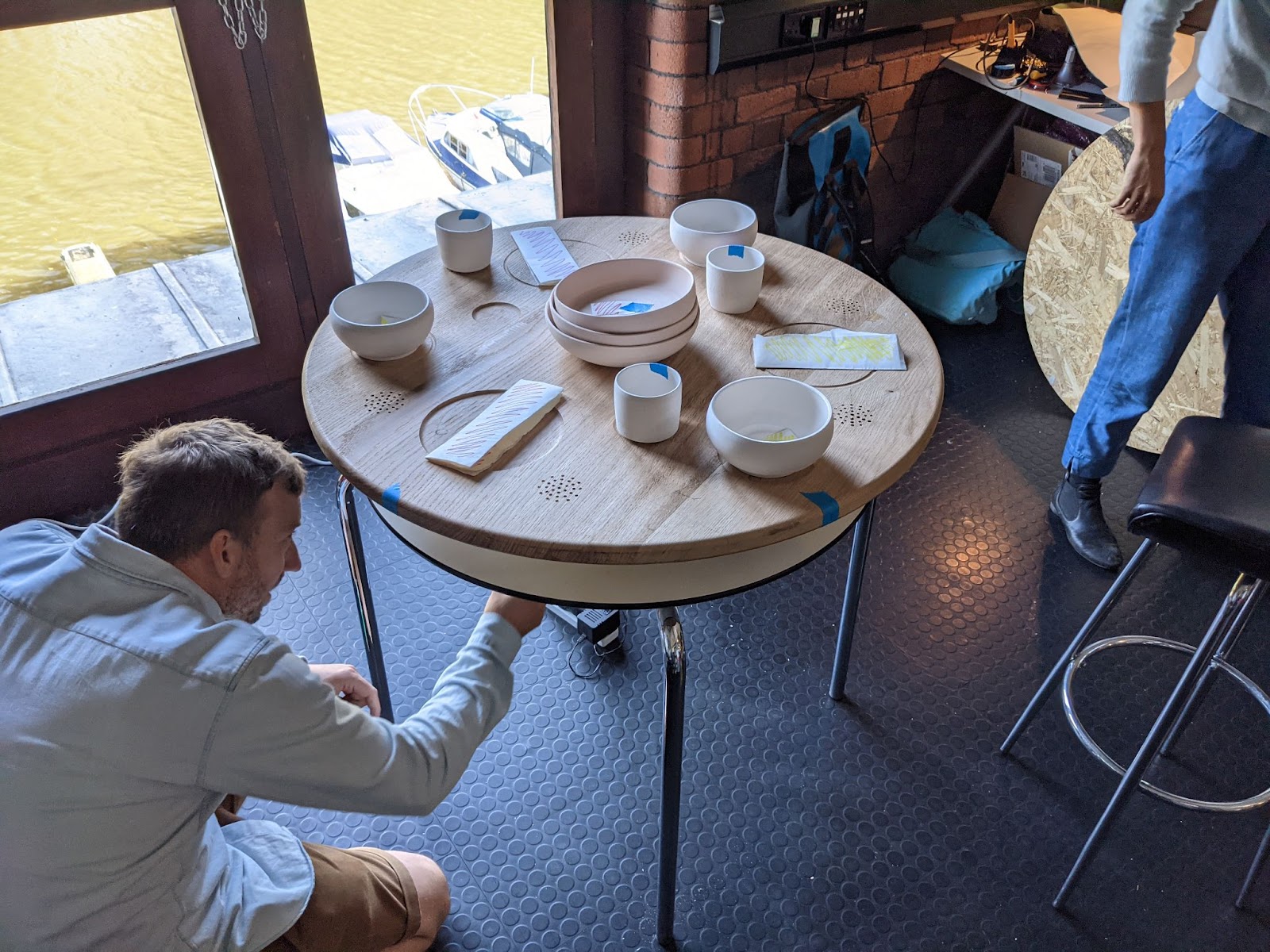
The Listening Table, exploring food justice, fishing, and livelihoods in the food system, is now on display to the public at Sparks, in Bristol city centre.
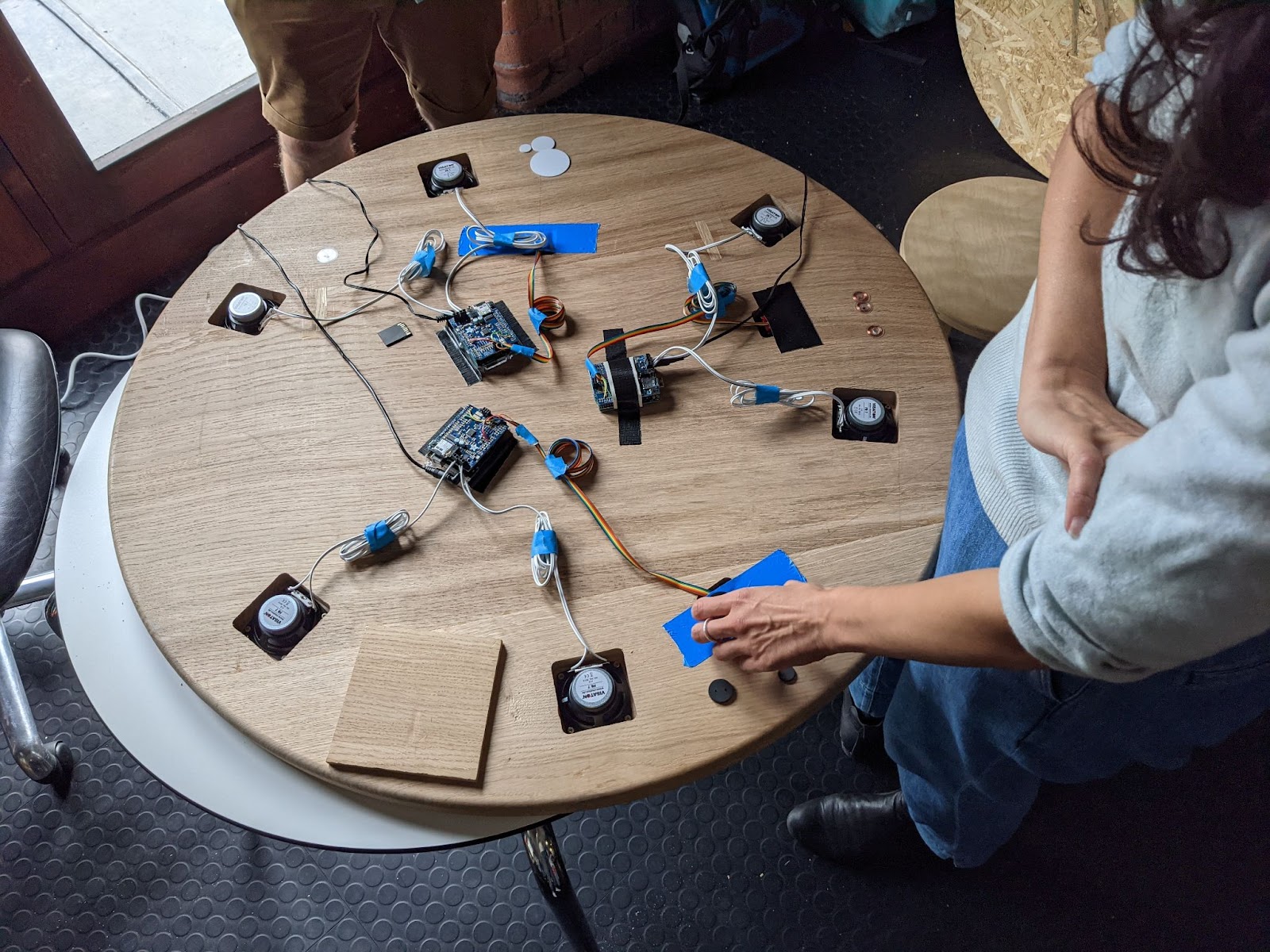
The installation is an interactive dining table with sounds and stories instead of food. It was developed by artists Amy Rose, Synnøve Fredericks and Pete Bennett who have crafted the beautiful wooden table, ceramic vessels, and curated the stories of fisherfolk that can be heard there.
Academics Dr Rob Skinner, Dr Lydia Medland and Dr Lauren Blake brought about the opportunity for the table to be made through inviting ideas for an artwork that would help explore the meaning of ‘food justice’. This term is gaining power, not least in Bristol, as people use it to point to issues of a lack of fairness in the food system. Rob, Lydia and Lauren were captured by the idea of a dining table that people could sit around to explore the idea of food justice.
Amy was invited as an artist in residence to the Bristol Researchers’ Food Justice Network’s seminar series. She was inspired by the work of Dr Lucy McCarthy on the fishing sector who presented at one of the seminars.
Amy took this inspiration back to the creative team and worked together with Synnove and Pete to develop ideas for the piece exploring the rituals of sitting at a table together, eventually travelling around the UK to meet people working in the fishing sector, and listening to their stories.
The table will be in Sparks for a month from 24th February 2024.
Read Dr Rob Skinner’s Blog on the art-research process (coming soon!)
Welcoming the intention to establish a strategy for horticulture for England, Dr Hannah Pitt from the University of Cardiff and Dr Lydia Medland from the University of Bristol submitted a contribution to the House of Lords Call for Evidence in April 2023.
In the submission, available below, they highlighted the mis-match between public health priorities and horticultural production and supply. While the Government recommend all adults and children to consume at least five fruit and vegetable portions a day, the UK is not producing the crops to support this.
They also drew attention to challenges faced by all in the existing workforce. The submission builds on the work of the Good Work for Good Food international Forum.
Following the Home Office revocation of the license of one of the seasonal agricultural worker recruitment operators, Dr Lydia Medland spoke to BBC farming today on 20th February 2023 about the scheme (listen here).
The UK Seasonal Worker visa route allows workers to come from around the world to work for up to six months. There are (or were) seven ‘operators’ of the scheme. These are licenced by the government as the recruiters and sponsors of the workers and are responsible for both enforcement of the scheme requirements, particularly ensuring that workers go home at the end of their stay, and for worker protection.
The UK has had some form of seasonal worker migration scheme since the end of World War II, but the current scheme dates from 2019, when following Brexit, EU workers no longer had access to the UK labour market, and UK fruit and vegetable growers and food producers had to look elsewhere to fill seasonal labour vacancies.
At the end of 2021, Dr Medland and Dr Scott (University of Gloucestershire) wrote a briefing outlining problems in the design of the scheme recommending major changes including a guaranteed minimum income, and for workers to have full access to public services.
In her interview with Radio 4 on 20th February Dr Medland spoke of her concerns that the same companies are responsible for ensuring workers’ return as are responsible for preventing their exploitation, saying that with ‘…outsourcing to for-profit businesses of this dual very important role, it isn’t surprising that something has gone wrong, I think the UK should go back to the drawing board on this scheme.’ Academic research has found (see for example Costello and Freedland, 2014) that where there is an interaction between protection of workers and enforcement of migration law, the enforcement role takes precedence. This leaves workers vulnerable to exploitation because they fear the same organisations and laws that are also meant to protect them.
Radio 4 put these comments to the Home Office who said, ‘The seasonal workers route has been running for three years and each year there have been improvements.’ However, the increasing scrutiny of the scheme by researchers, NGOs and journalists may be having some impact because on 23rd February 2023 Mark Spencer, the Farming Minister announced that Seasonal Workers coming to the UK on the scheme would be guaranteed 32 hours a week of work. This is in response to reports that workers are returning in debt because of there is less work than originally expected.
Whilst the Seasonal Workers visa route is no longer officially a ‘pilot’ it has only been renewed until the end of 2024 and it remains open to significant review. This policy is part of the focus of the ‘Working for 5 a day’ project because seasonal migrant workers are a vital part of the labour force that ensures consumers have access to fruit and vegetables. We will continue to follow this policy development and its changing context.
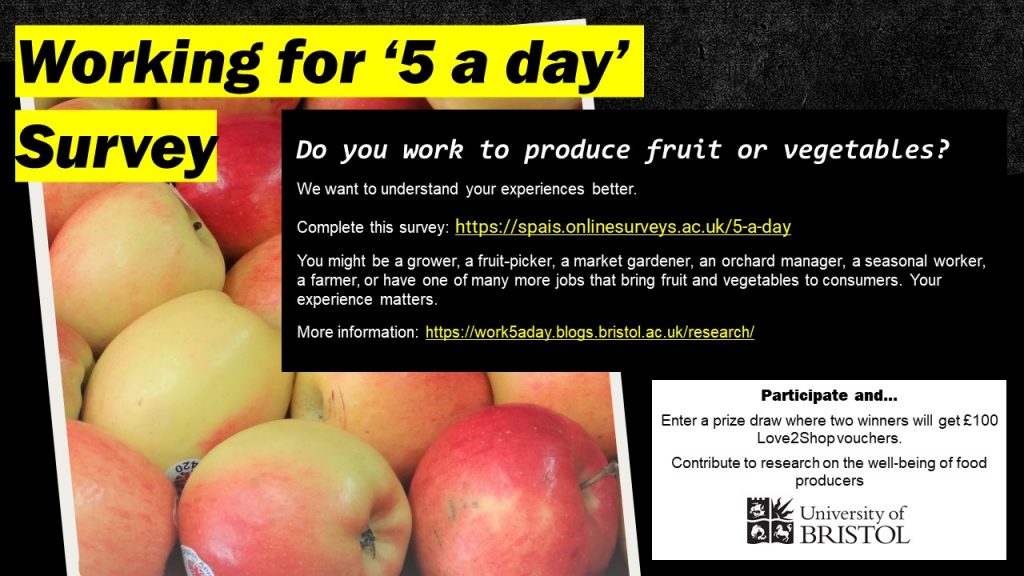
Today the ‘working for 5 a day’ research survey is launched. The survey differs from previous research because it takes an interest in all those working in fruit and vegetable production. Avoiding an ‘us and them’ approach, the survey is open to growers and farmworkers, British and non-British workers, those based across England, Wales, Scotland and Northern Ireland, and conventional and organic producers of all scales of production.
Growers, workers, seasonal migrant workers and others in the sector are vital for the UK’s food system. If we are to sustain a resilient food and farming sector able to provide healthy food for the population, we need to take note of the experience of those in the sector. This is the purpose of the survey, which in subsequent years will be followed up by in-person qualitative research.
The research comes at a time when awareness about the need to reduce carbon emissions is high, as the UK hosts COP26 in Glasgow this year. Reducing food miles and protecting UK production is one way to do this. This is particularly the case for types of fruit and vegetable that can easily be grown in the UK such as apples and pears, berries and other soft fruit such as plums, as well as a very wide range of vegetables.
The survey is now open in English, takes only about 15 minutes to complete, and gives those who enter the opportunity to enter a prize draw for Love2Shop vouchers which can be used in many high street shops.
Translations are also available in two languages which are common among seasonal agricultural workers; Romanian and Ukrainian. These languages have been chosen in order to open accessibility to workers who come from the selected countries both within the European Union (Romania) and from beyond its borders (Ukraine). Other horticultural workers from all countries are also welcome to participate in the English version.
All those who work in growing, picking, packing, preparing or in some other way supporting fruit and vegetable production are invited to complete the survey, please access it here: https://spais.onlinesurveys.ac.uk/5-a-day
Leading researchers have sent a letter to UN agencies dealing with issues related to work in the food system to call for a new positive vision for the future of work in this sector.
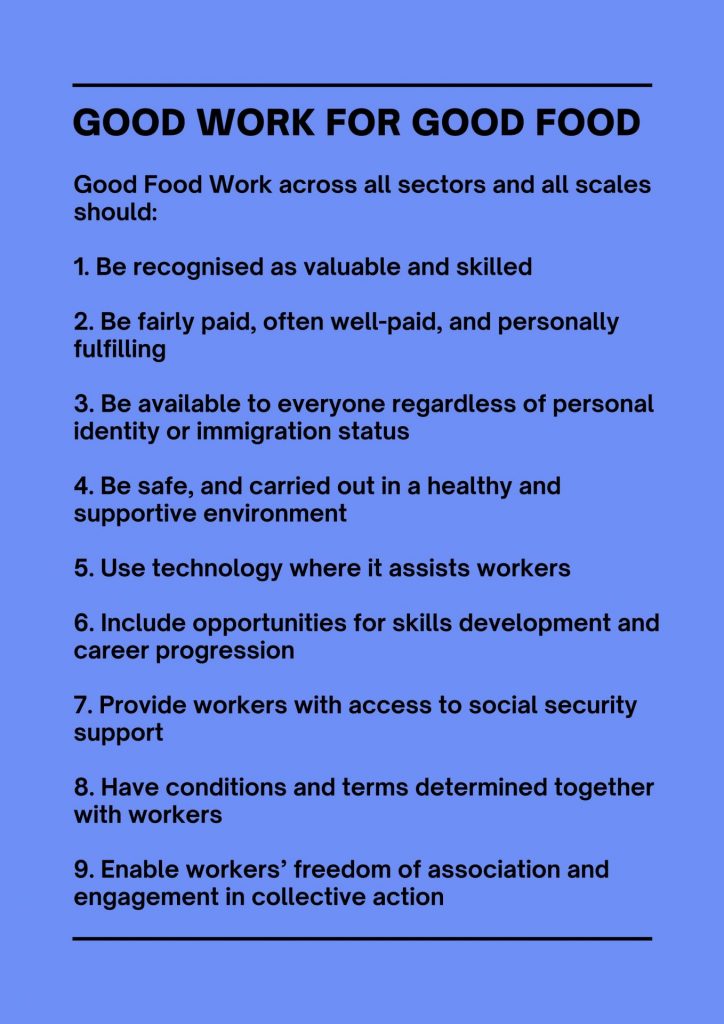
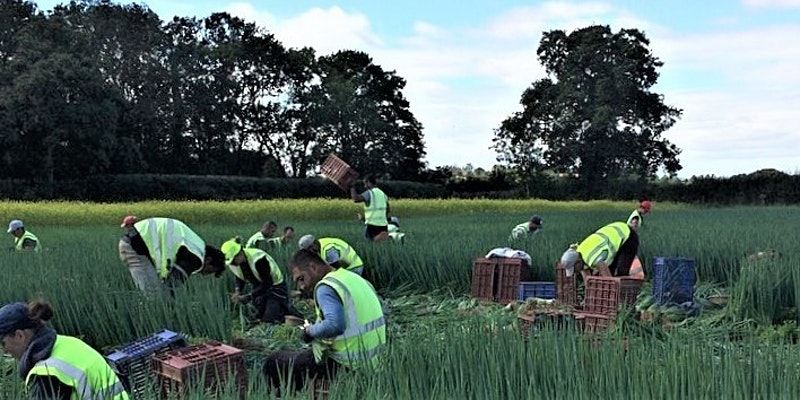
The letter calls for a positive vision for food work and outlines nine principles for such a vision (below). The letter comes at a time when a lot of focus is given to agri-tech innovations while the everyday challenges faced by food and farm workers and growers are often overlooked. The vision outlined in the principles calls for technology to be used where it assists workers. The example given in the letter is of table top strawberry picking which avoids workers needing to stoop down.
This is also a moment in which the role of food workers is being re-considered in the wake of them being recognised as essential workers during the COVID 19 pandemic. The letter calls for all food work to be recognised as skilled and valuable and for it to therefore be well paid and personally fulfilling for workers. The moment to address this call to UN agencies is ripe because 2021 has been declared the International Year of Fruit and Vegetables by the Food and Agriculture Organisation.
The twenty-five original signatories of the letter include academics who have been researching in this area for decades such as Professor Julie Guthman, and campaigner Vicki Hird from FARM Campaign, Sustain. The letter was collaboratively written by the co-organisers of an event in May 2021, Dr Hannah Pitt, Dr Lydia Medland, Susanna Klassen and Dr Poppy Nicol and the participants of the event were all invited to edit a draft of the letter and principles prior to it being finalised.
To sign and support the open letter and this initiative please follow this link.
Good Food is healthy, culturally appropriate, accessible for all and produced in ways which are ecologically sustainable and socially just. Good Food Work means decent jobs producing, processing and distributing food which are fairly rewarded and personally rewarding. It means jobs and training accessible to all, in safety and with dignity.
This Forum provided a space for researchers to explore what Good Food Work is and can be. We considered how research could contribute to making food work better. The event was designed to foster interactive discussion and find shared priorities for future action. Speakers from three continents and time zones provided starting points for discussion and to help define priorities.
2021 is the International Year of Fruit and Vegetables so the programme was designed to focus on jobs and work for horticultural production. Researchers focused on other types of food work are also welcome. Key discussions focused on:
Developing a vision for Good Food Work Understanding food work in the context of the global food system Considering examples from Australia, New Zealand and Scotland Unpicking tensions in labour and migration regulations and how they affect labour markets The prospect of agri-robotics and what this means for existing workers.
The speakers were:
Dr Joanna Howe, Associate Professor in Law at the University of Adelaide and a member of the Australian Government’s Ministerial Council on Skilled Migration. Dr Laura-Anne Minkoff-Zern, Associate Professor, Food Studies at Syracuse University, researching the interactions between food and racial justice, labor movements, and transnational environmental and agricultural policy. Dr Lucila Granada, CEO of Focus on Labour Exploitation (FLEX), a research and policy organisation dedicated to end labour exploitation. Professor Julie Guthman, Geographer and Professor of Social Sciences at the University of California, Santa Cruz, where she conducts research on the conditions of possibility for food system transformation in the US.
Attendees included experts in the area from many different fields and produced a rich international reflection. The event was associated with the project ‘Knowing to Grow’ which is part-funded by Cardiff University and the European Regional Development Fund through the Welsh Government. It was also supported by the British Academy through collaboration with the project, ‘Working for ‘five a day’: Risk and resilience in the changing food system,’ led by Dr Lydia Medland.
The organising committee are currently working on an academic paper that reflects on the conference and presents the vision that emerged from it. They are also drafting a shorter collaborative statement that will be open to edit to all those who attended the conference.